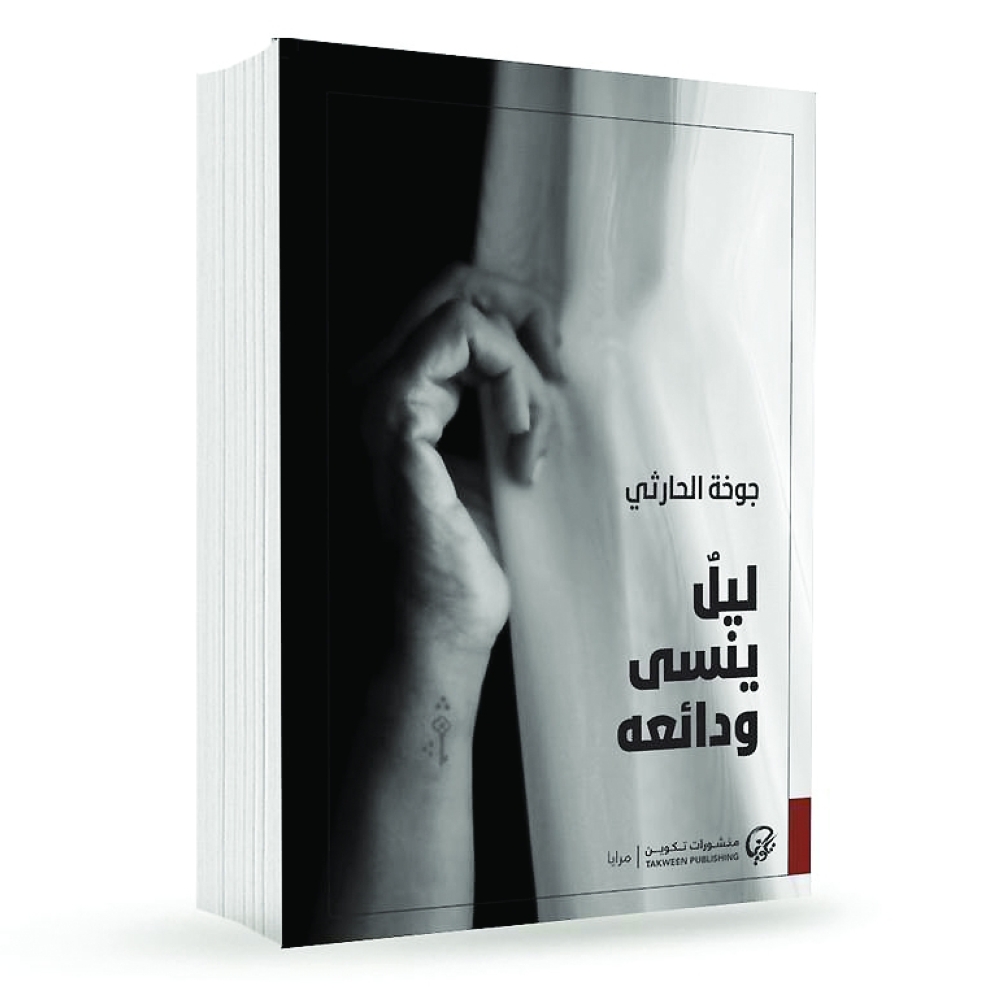






Jokha al Harthy’s short-story collection 'Night Forgets Its Deposits' begins with a title that is deceptively simple yet rich in meaning. The title does not refer to a particular night; rather, it evokes the symbolic associations of night itself — silence, mystery, memory, longing and concealment. By attributing the human act of forgetting to the night, Al Harthy transforms it from a natural phenomenon into a living presence capable of carrying and losing secrets.
The phrase opens up a series of subtle contrasts: night and revelation, stillness and movement, nature and humanity. These are never stated directly but shape the emotional atmosphere of the collection. The meaning lies not only in the night itself, but also in what has been forgotten and left behind. Through this interplay, silence becomes a source of storytelling and stillness becomes a space where hidden lives emerge.
Throughout the collection, the narrative voice gradually uncovers its inner world. Night serves as a protective veil beneath which memories, anxieties and private emotions can surface. It becomes a realm of confession, allowing the self to speak while remaining partly hidden. The stories reveal characters who move through loneliness, desire, loss and self-discovery, using the night as both a setting and a psychological landscape.
The narrator frequently shifts between observation and participation. At times she reflects upon events from a distance; at others she becomes deeply involved in them. This creates a storytelling voice that feels intimate yet remains distinct from the author herself. As modern literary theory reminds us, the narrator is a textual presence rather than a direct reflection of the writer, a voice through which experiences and ideas are artistically shaped.
A recurring feature of the collection is the tension between concealment and revelation.
Characters often appear without detailed physical descriptions or fixed identities. Instead, they emerge through emotions, memories and fleeting encounters. This openness allows them to transcend individual circumstances and acquire a more universal dimension. Night becomes the thread connecting these fragmented experiences, creating a shared space for reflection and emotional disclosure.
One story follows a woman secretly watching the man she loves. Moving cautiously through the night, she conceals her intentions while another woman enters the narrative, gradually becoming a mirror through which hidden feelings surface. Their encounter reveals aspects of the narrator’s emotional life that had previously remained unspoken. In this way, night becomes a space where identities blur and deeper forms of self-awareness emerge.
The collection repeatedly explores the relationship between the visible self and the hidden self.
Language itself becomes part of this process. Rather than merely conveying events, it shapes the emotional texture of the stories. As one critic observes, the collection is united by a profound existential concern with the meaning of life, loss and the complexity of human relationships.
Many of the stories examine social and psychological realities through intensely personal experiences. Characters struggle between intimacy and isolation, belonging and separation. Even when they seek connection, distance often remains. Relationships begin with hope but gradually expose emotional fractures and unresolved tensions.
Night appears in many symbolic forms throughout the collection. It becomes a sea, a train journey, a tunnel, or a road into the unknown. The narrator may appear as a woman searching for her beloved, a young girl dreaming of love, a wife confronting betrayal, or a solitary traveller.
Despite these changing identities, night remains the constant element linking the stories together.
One of the most powerful stories centres on a woman who discovers her husband embracing the household maid. The moment becomes an emotional awakening. Hurt and humiliated, she briefly imagines tearing up his passport, not as an act of revenge but as a desperate attempt to regain some sense of control. The story captures the complex emotions that accompany betrayal and abandonment.
Another story revolves around separation. The narrator recalls a dream that seemed to predict the end of a relationship years before it happened. A man remains seated while she departs carrying a worn suitcase marked by the traces of previous journeys. Here, night becomes a symbol of irreversible loss and the emotional distance that remains after love has faded.
In Nightly Deposits, many of the collection’s themes converge. What begins as romance eventually turns into estrangement and departure. Night takes on the form of a storm that sweeps away the remnants of the past. Yet memory also becomes a source of survival. The narrator finds refuge not in a present relationship but in the lingering power of an earlier love, which guides her towards a different future.
The collection’s language is lyrical and deeply evocative, infused with longing and emotional intensity. Through stories of love, betrayal, separation and self-discovery, Al Harthy explores the hidden emotional lives of her characters. Night functions as both a physical setting and a state of mind — a place where secrets are sheltered and, ultimately, revealed.
One of the collection’s most distinctive features is its focus on interior experience rather than external action. Characters are defined less by appearance or place than by their dreams, fears and desires. This gives the stories a universal quality, allowing readers from different backgrounds to recognise something of themselves within them.
Ultimately, Night Forgets Its Deposits is a meditation on memory, loss and the hidden worlds people carry within themselves. Night emerges as the collection’s central symbol — a space where longing, grief, hope and imagination converge. By the end, the reader is left with a lingering question: if the night truly forgets its deposits, what becomes of the stories and emotions entrusted to its care?
Thani al Hamadani is an Omani writer. This is a translation of the original Arabic article published in the print edition of the cultural supplement of the Oman newspaper on May 31.
Text by Thani al Hamadani and translated by Badr al Dhafari
Oman Observer is now on the WhatsApp channel. Click here